
Principles of
Balanced Nutrition
A structured exploration of fundamental nutritional concepts — from nutrient groups and food preparation to the essential role of hydration in bodily functions.
Understanding Nutritional Fundamentals
Nutrition is the process through which living organisms obtain and use food substances necessary for growth, function, and maintenance. Balanced nutrition refers to the consistent intake of a wide variety of foods that together supply the full spectrum of nutrients the body requires.
Rather than focusing on individual "superfoods" or isolated compounds, the concept of balance emphasizes variety, proportion, and regularity. The body functions as an integrated system, where different nutrients interact and support one another across metabolic processes.
Understanding the broad categories of nutrition — macronutrients, micronutrients, fiber, and water — forms the basis of informed dietary awareness and is the central purpose of this resource.
The Major Food Groups
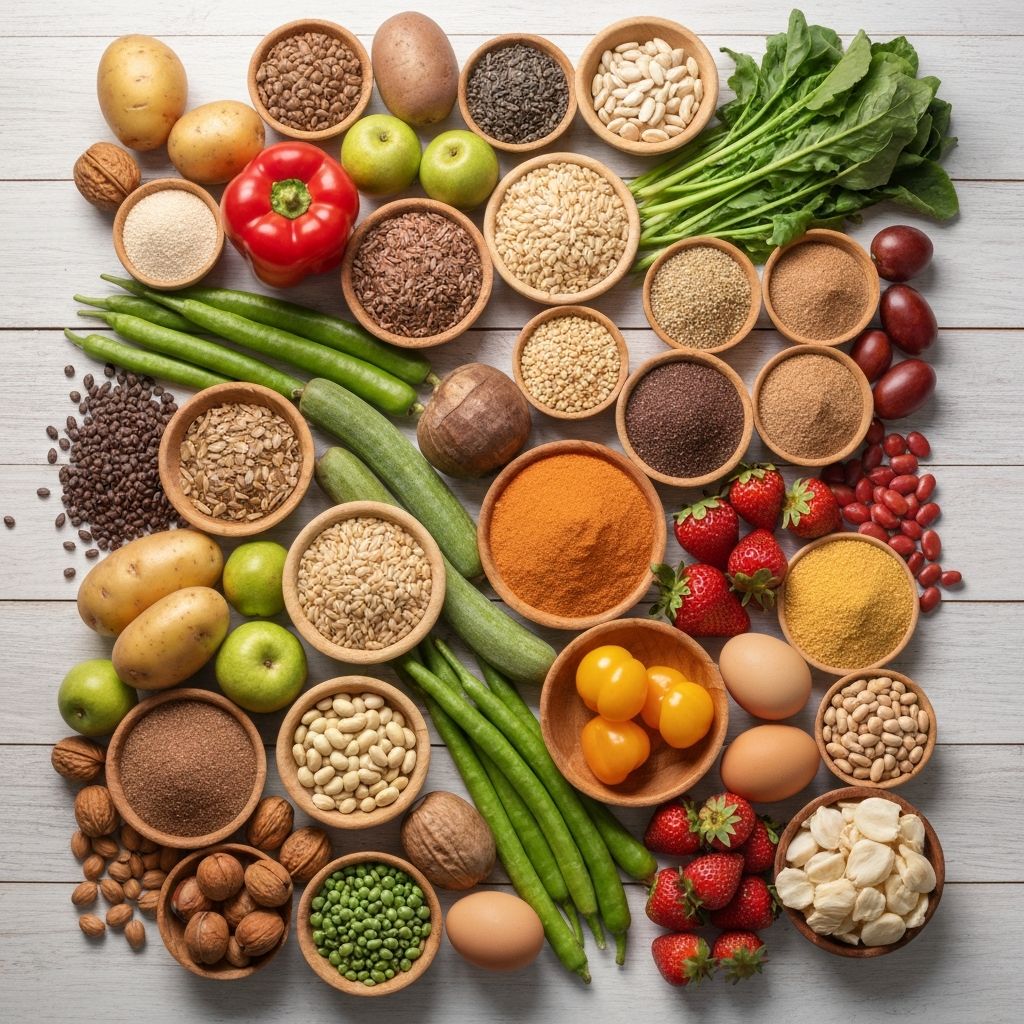
Foods are commonly organized into groups that share similar nutritional profiles and functional roles within the body. Understanding these groups helps contextualize why variety in the diet is considered a foundational nutritional principle.
- Grains and Cereals — Whole grains such as oats, quinoa, and brown rice provide carbohydrates that serve as the body's primary energy source, alongside fiber and B vitamins.
- Vegetables — A broad category supplying vitamins, minerals, antioxidants, and dietary fiber. Diversity within this group is significant, as different vegetables contain different micronutrient profiles.
- Fruits — Natural sources of sugars, vitamins (particularly Vitamin C), potassium, and fiber. Fresh, whole fruits differ considerably from processed fruit products.
- Proteins — Foods such as legumes, fish, poultry, and nuts supply amino acids necessary for cellular repair, enzyme production, and immune function.
- Dairy and Alternatives — Sources of calcium, phosphorus, and protein relevant to bone structure and cellular function.


The Role of Macronutrients
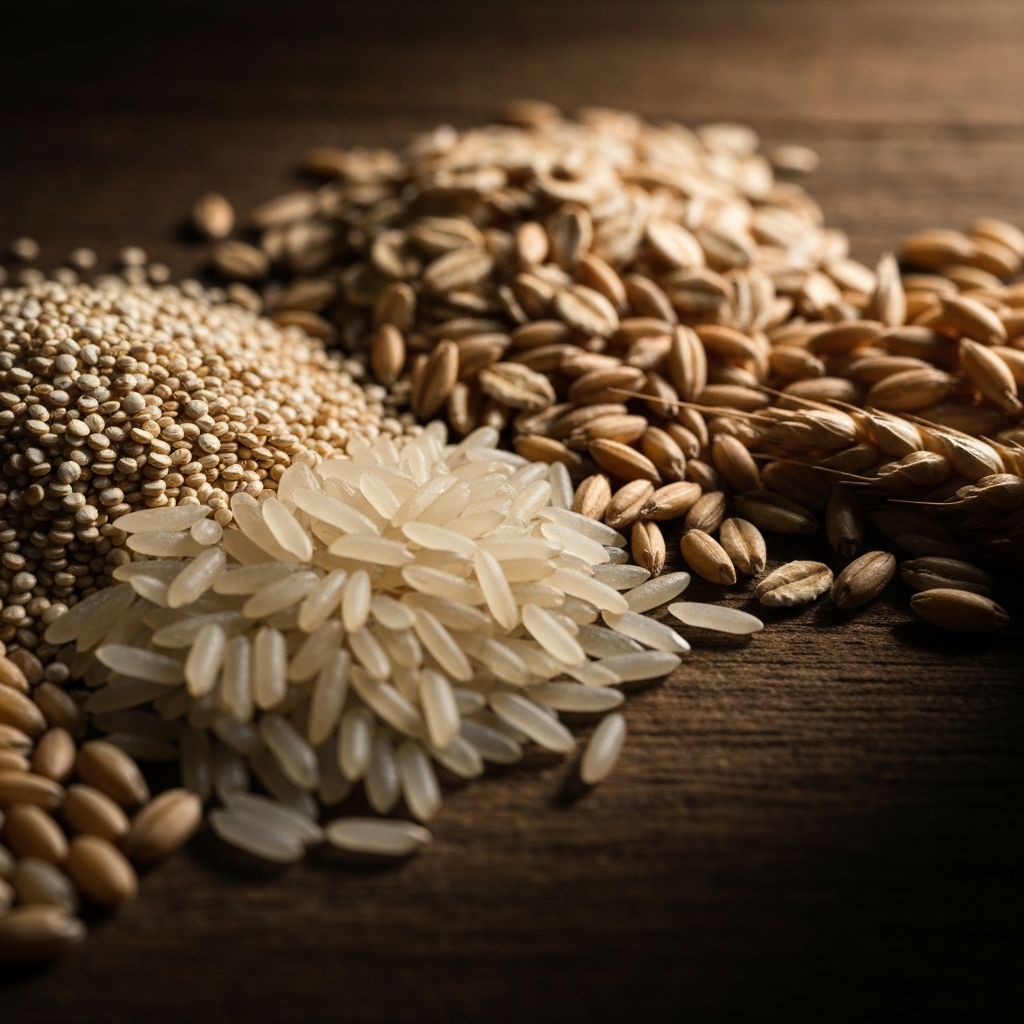
Macronutrients are the three primary classes of nutrients required in relatively large quantities. Each serves distinct structural and functional roles within the body's biochemical systems.

Carbohydrates
Carbohydrates are the body's preferred fuel source. They are broken down into glucose, which powers cellular activity. Whole food sources — such as legumes, whole grains, and vegetables — provide carbohydrates alongside fiber and micronutrients, distinguishing them from refined carbohydrate sources.
Proteins
Proteins are composed of amino acids — the structural units of virtually all tissues and enzymes. The body uses dietary protein for cellular repair, immune response, and hormone synthesis. Not all proteins are identical; the amino acid composition varies across animal and plant sources, which is why diversity matters.
Complete proteins contain all essential amino acids; incomplete proteins can be combined across meals to achieve similar coverage.
Fats
Dietary fats serve as energy reserves, support fat-soluble vitamin absorption (A, D, E, K), and are integral to cell membrane structure. Unsaturated fats — found in avocados, nuts, and oily fish — have distinct properties compared to saturated and trans fats, and their sources matter considerably.
The body requires some fat intake for core physiological functions; complete elimination is neither practical nor reflective of nutritional science.
Essential Vitamins and Minerals
Micronutrients are vitamins and minerals required in smaller quantities than macronutrients but are equally indispensable to bodily function. Deficiencies in specific micronutrients are associated with a range of physiological disruptions, even when macronutrient intake is otherwise adequate.
- Fat-Soluble Vitamins (A, D, E, K) — Stored in body fat; involved in vision, bone metabolism, antioxidant activity, and blood coagulation.
- Water-Soluble Vitamins (B complex, C) — Not stored in significant quantities; must be regularly replenished through food. B vitamins support energy metabolism; Vitamin C is involved in connective tissue formation.
- Macrominerals (Calcium, Magnesium, Potassium) — Required in larger amounts; involved in bone structure, nerve conduction, and fluid balance.
- Trace Minerals (Iron, Zinc, Iodine) — Needed in very small quantities; critical for oxygen transport, immune function, and thyroid activity.


Hydration: A Core Principle
Water is not a nutrient in the traditional sense, yet it is the medium in which nearly all biochemical reactions occur. It comprises approximately 60% of total body weight and participates in digestion, nutrient transport, temperature regulation, and waste elimination.
Unlike macronutrients, water has no caloric value and cannot be stored in meaningful quantity. Adequate fluid intake from water and water-containing foods is therefore a continuous requirement rather than a periodic one.
The water content of whole fruits, vegetables, and cooked grains contributes to daily fluid intake alongside direct consumption of water. Thirst, while a useful signal, is not always a reliable early indicator of fluid status.
Food Preparation and Retention of Nutrients
The manner in which food is prepared affects the availability of its nutrients. Heat, water, and oxygen can alter vitamin content, alter protein structures, or modify the bioavailability of minerals. Understanding the general effects of different preparation methods adds context to food selection and cooking practices.
Steaming, for example, generally preserves more water-soluble vitamins than boiling, since fewer nutrients are lost into cooking water. Using fresh ingredients close to the point of harvest reduces nutrient degradation that occurs over time. Gentle heat at lower temperatures tends to preserve more heat-sensitive compounds than extended high-temperature cooking.
These are considerations rather than prescriptions — the objective is to provide a factual basis for understanding how preparation interacts with nutritional content.



The Importance of Dietary Fiber
Dietary fiber refers to the indigestible portions of plant-based foods — primarily polysaccharides such as cellulose, hemicellulose, and pectin. Unlike digestible carbohydrates, fiber passes largely intact through the small intestine and into the colon, where it performs several structural functions in the digestive process.
Two principal categories of fiber are recognized: soluble fiber, which dissolves in water to form a gel-like substance that slows digestion and modulates absorption rates; and insoluble fiber, which adds bulk to stool and supports regular intestinal movement.
Fiber is found in whole grains, legumes, vegetables, fruits, seeds, and nuts. Processing — such as refining grains or removing skins — typically reduces fiber content. The distinction between whole and refined grain products is largely attributable to fiber and associated micronutrients retained in the outer bran layer.
Fiber also serves as substrate for the gut microbiota — the community of microorganisms residing in the large intestine that play roles in various metabolic and immune processes. The study of the gut microbiome is an active area of nutritional science, though general guidance on fiber-rich diets predates and extends beyond this specific field.
Diversity in Diet

No single food contains all the nutrients required for complete human nutrition. The concept of dietary diversity reflects this biological reality: the broader the range of whole foods consumed, the more comprehensive the coverage of the body's nutritional requirements.
Variety also reduces the risk of consuming excessive quantities of any single compound while excluding others. Different plant foods contain distinct phytochemicals — naturally occurring compounds that interact with physiological processes in ways that are still being characterized by nutritional research.
Exploring Related Topics
About PIMLOR
Understand the purpose and philosophy behind this educational resource — its origins, editorial principles, and commitment to informational integrity.
Learn MoreNutritional Insights
Explore contextual discussions on food preparation approaches, seasonal produce, and the general distinctions between whole and processed food categories.
Explore DetailsFrequently Asked Questions
A structured collection of common questions about balanced nutrition concepts and the scope of this informational resource.
Understand Concepts